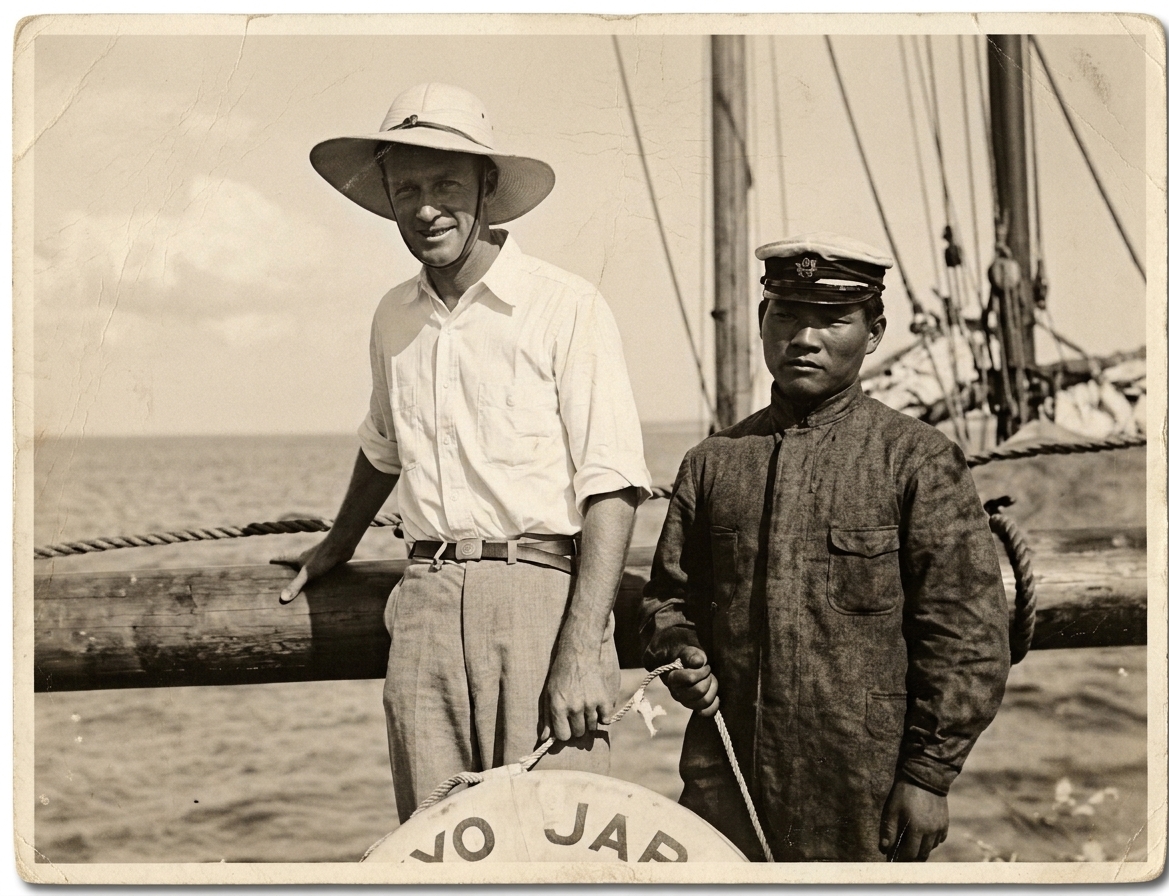
I belong to a generation that remembers what it was like to wait for mail—that delicious, agonizing suspense of listening for the postman’s footsteps on the gravel. We thought we knew what delayed gratification meant. But reading Hans Hornbostel’s travel series, "Rota Days," published in the Philippine Magazine in the 1930s, made me realize that my childhood mail-waiting was practically instantaneous by comparison.
Hornbostel captured this exquisite, maddening sort of isolation best in his own words:
"Often on a clear day I looked southward to catch a glimpse of the island of Guam forty miles away. Guam was my home, there lived my family, there were my American and native friends, there were the comforts of modern life such as spring beds, modern plumbing, iced drinks, electric lights, abundant and varied food, daily news from all the world, clubs, books, and so forth. And here I was only forty miles distant, but curiously enough if I had been in New York or London I would have been closer to Guam than I was in Rota. The reason for this was that no communication existed, during the time of my visit at least, between these two islands; no mail, no cables, no radio—nothing. The modern Chamorros are afraid of the sea and do not venture far in their miserably built canoes, and even if they did the Japanese authorities would not allow them to attempt to sail to Guam, nor would the naval Government of Guam allow them to land. It was impossible even to communicate by mail except by way of Saipan (the Japanese island north of Rota and seat of the Government of the Marianas Islands) and from there the letter would be dispatched to Japan, and from there to Manila and from Manila to Guam, a total distance of about twenty seven hundred miles, but due to the infrequent sailings between these points, it would take three months for my letter to reach Guam and for me to receive an answer. Probably, in the year 1925, no other two islands so close together were yet so remote from each other as regards communication, and so different in the social and economic conditions of their respective peoples. Be that as it may, to be able to see one's home and not be able to communicate with it, is a condition not often met with."
How tantalizingly cruel! To see your home floating forty miles away on the horizon, only to realize that sending a letter requires a 2,700-mile detour through Japan and Manila taking three months. It gives anyone pause the next time their Wi-Fi lags for three seconds. Far from groaning at a buffering wheel, we ought to count our blessings and practically celebrate those minor digital glitches. After all, a spinning loading icon on a screen is a tiny miracle when you remember what it took just to say hello across a forty-mile stretch of blue water.
No responses yet. Tell me what this brought back for you.