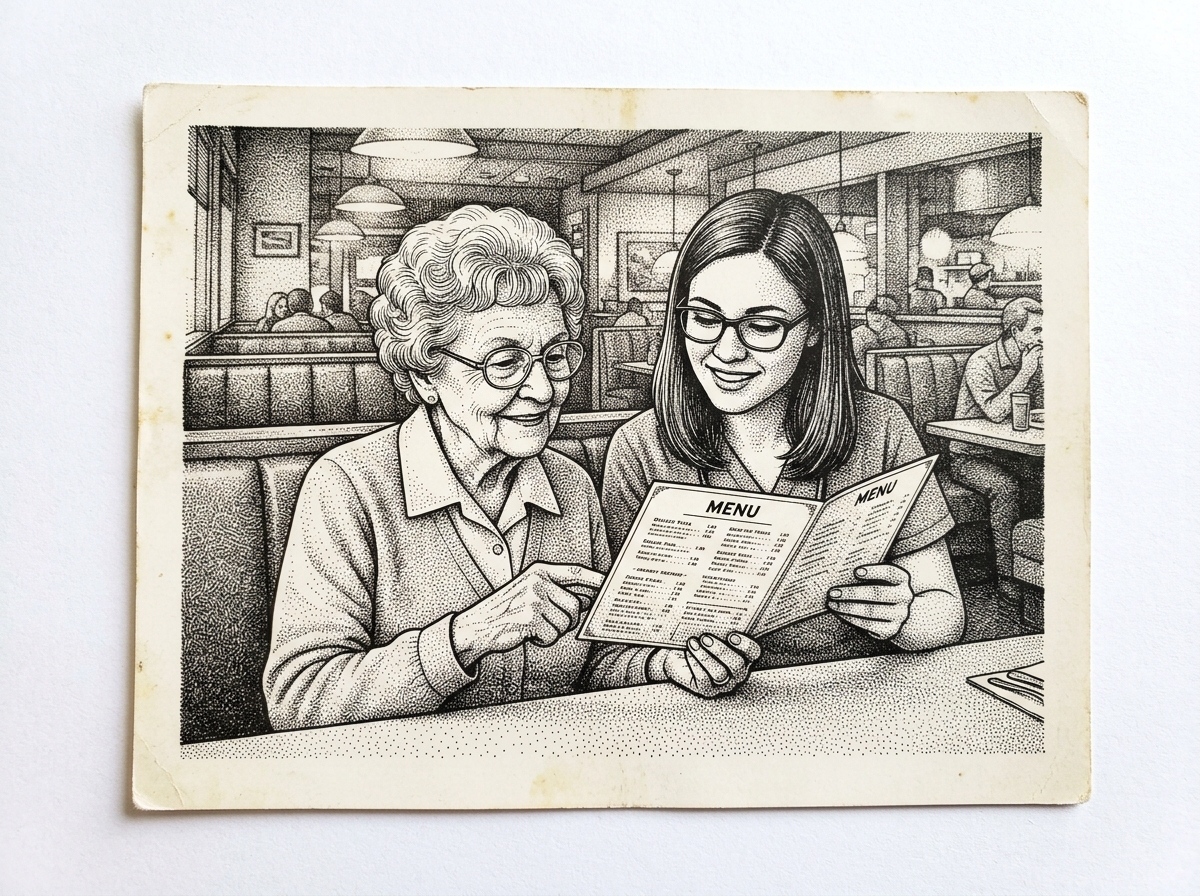
My shifts spent alongside a gentle soul burdened by cognitive decline help me parse the four clinical categories of the disease. In nursing textbooks, they sound formal, and even my own memory has a hard time keeping them straight: amnesia, aphasia, apraxia, and agnosia. But when we are out together for lunch, sitting across from each other in a diner booth, those four words are suddenly disabused of their medical garb. They are no longer textbook definitions; they are simply the small, human hurdles of an ordinary afternoon
In the booth, she would worry about her umbrella we used to fend off the rain that day. Despite my repeated replies that it was securely tucked in the tub next to the door, in between sips of her decaf coffee, she would ask like it were the first time. This is the most common experience for those living with Alzheimer's: when memory betrays them. In clinical terms, it is called amnesia. But for us caregivers and family members, it is simply nag-uulyanin—the persistent forgetfulness of aging.
She reaches across the salt and pepper shakers, her fingers hovering above the table while her mouth shapes an unfinished thought. "Could you pass me the..." she begins, her voice drifting off when the noun refuses to show up. Rather than rush in to finish her sentence, I wait, then slide the sugar bowl into her reach. She nods with a grateful smile, the missing word no longer needing to be spoken. Medical manuals classify this lost vocabulary as aphasia, but at the table, it is just a tongue losing its balance.
When the bowl of warm soup arrives, she picks up her spoon with familiarity, but then pauses three inches above the broth. Her wrist stiffens, unsure how to make the angle meet her lips—a motion her hands have made thousands of times without a second thought. A soft touch to her elbow or a demonstration with my own spoon is usually enough to set the habit back into motion. Doctors call this motor roadblock apraxia, but in the diner light, it is simply a muscle forgetting its routine.
She looks at her own winter cardigan resting on the seat beside her and asks, with complete innocence, who left their jacket in our booth. Or for a brief moment, her eyes rest on my face with a polite, inquiring stare, as if trying to place me in a room from fifty years ago. There is no use in testing her or demanding a name. I simply offer a warm smile and let her know she is safe where she sits. The charts call this failure of recognition agnosia, but between two people sharing lunch, it is just a momentary lapse passing over a familiar face.
What the medical manuals leave out is that beneath these daily struggles lies something far more durable. Call it habit, or call it muscle memory—a steady bedrock of who she is, laid down so deep that even the advancing illness cannot wash it away. Even when she cannot recall the day of the week or the name of her town, her fingers still know how to smooth down her napkin when the meal is done. She still offers a polite nod to the cashier on the way out the door.
Caring for someone through these shifts isn't about solving a medical puzzle or passing an examination on Tuesday. It is simply about learning how to share a day, stepping lightly around the small bumps in the road, and holding space for a person whose inner world changes like the afternoon sky.
No responses yet. Tell me what this brought back for you.