I was reading Hans Hornbostel’s article in Philippine Magazine, an account of his trips to the Marianas in the 1920s. He talked about latte stones, his research for the Bishop Museum, and how a hyoid bone is usually smaller in women, among other curious observations.
It was the night of the Okinawa festival on Saipan, and Hans was packing for Tinian. The monsoon wind kept blowing out his kerosene lamp and scattering papers across the room. A sharp knock at the door only added to his irritation. But he settled the moment he saw Jose Ada, a man he held in high regard.
Ada handed Hans a bundle of panoramic photographs of the Mariana Islands. They had been left behind by a mutual friend with strict instructions: pass them along to the first American coming through from Guam.
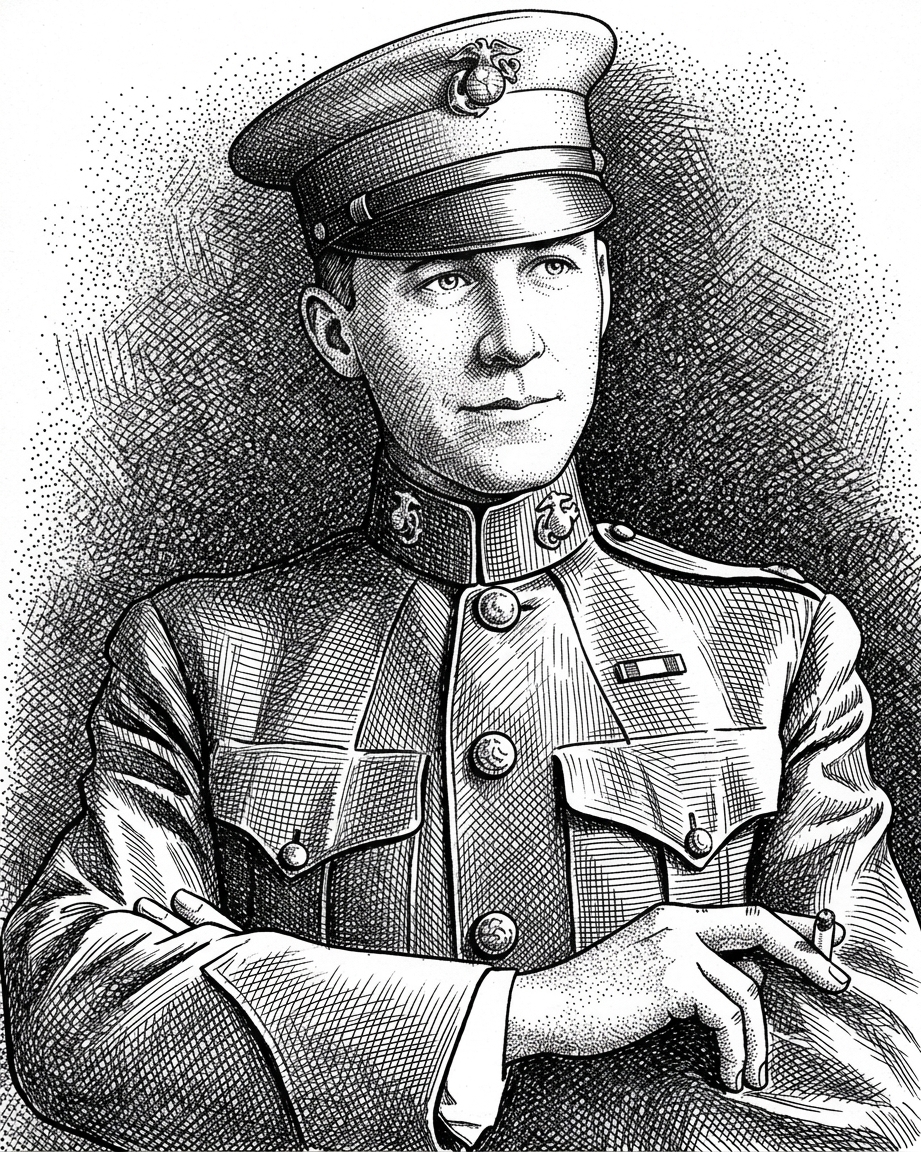
That friend was Marine Lt. Col. Earl Hancock "Pete" Ellis—a brilliant strategist, and godfather to Hans’ young son, who bore his name.
Hans’ account cuts deep. You can feel how sorely he missed his compadre, and how heavily that death weighed on him. He conjured visions of a tragic end: Earl lying half-naked in a thatched hut on a far-off atoll, burning with fever, babbling about his life until his heart gave out at sunset. Hans blamed it on severe alcohol abuse—or perhaps something more sinister. Back home, rumors ran wild. People swore Japanese spies had poisoned him to keep their secrets safe.
The truth was simpler, and far sadder. Historian Dirk Ballendorf later filled in the gaps with eyewitness accounts. Earl was not murdered.
He had come to Micronesia on a clandestine intelligence-gathering mission, convinced that Japanese expansion in the South Seas Mandate would eventually drag the United States into war. But his severe alcoholism compromised the operation. Earl remained heavily intoxicated on most days, requiring medical care on several occasions.
Professor Ballendorf thoroughly dismantled the conspiracy theories. Japanese officials, he noted, repeatedly ensured Earl received medical attention. Though they found his presence deeply suspicious, they treated him with kindness—even as they watched his every move.
When news of his death reached Washington, D.C., the Navy assigned an agent to bring his remains home. That heavy task fell to Navy Pharmacist Lawrence Zembsch. Zembsch oversaw Earl’s exhumation and cremation. But on the return journey, bearing the urn, Zembsch suffered a complete nervous breakdown. Upon reaching Yokohama, he was admitted to a hospital. While he was recovering, the Great Kantō Earthquake struck, leveling the building. Zembsch died in the collapse.
In the wreckage, workers eventually found Earl’s urn. It made the long journey home at last, to a quiet plot in Arlington National Cemetery.
Zembsch’s mission never recovered Earl’s personal effects. Even after the war, no trace of his notebooks or belongings was ever found.
In hindsight, Earl needed no assassin. The poison was already in his glass, and he drank it willingly to quiet the storm inside him. He had accurately foreseen the coming war in the Pacific, only to fall in a private, lonely conflict he could never win.
No responses yet. Tell me what this brought back for you.