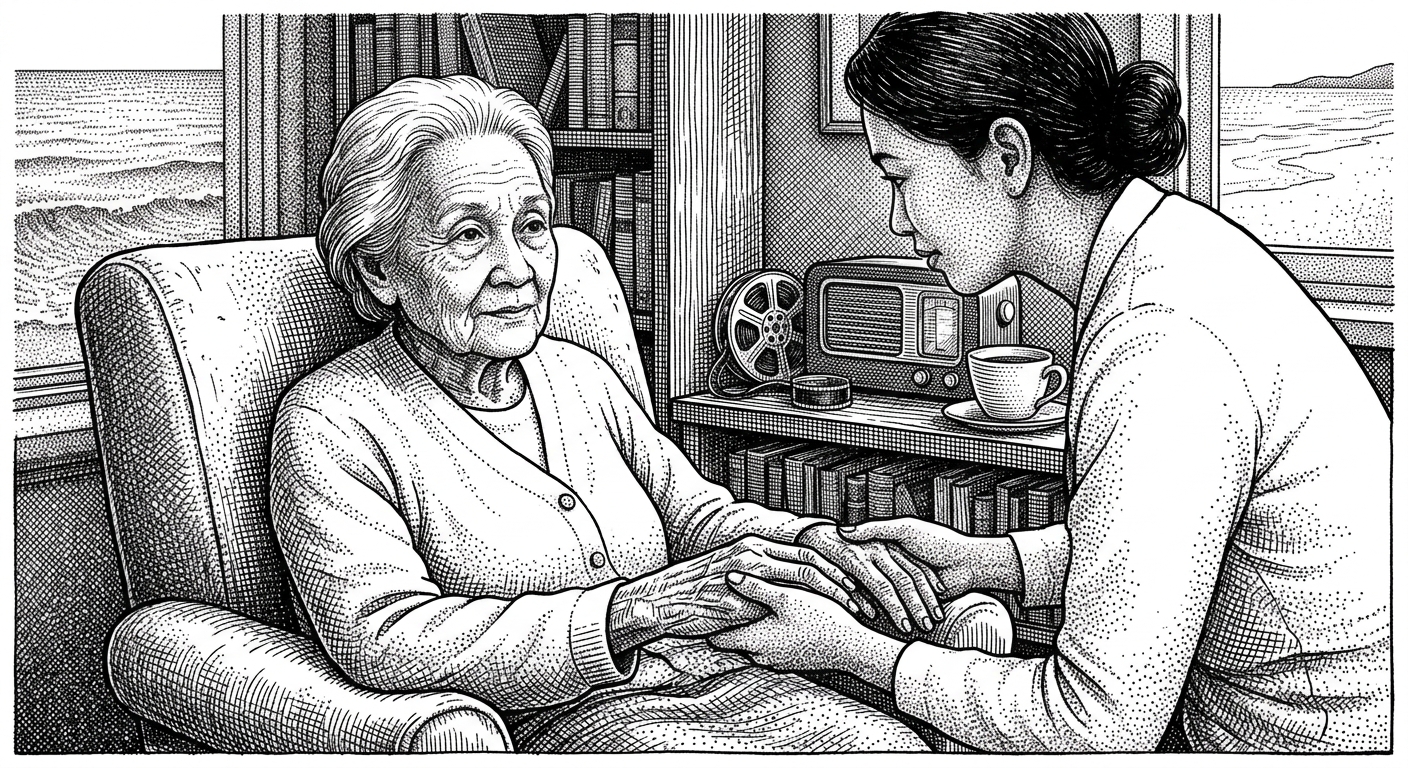
In the wake of a loss, I find myself taking a brief, well-earned breather. Preparing for the next assignment is no small undertaking; it requires a complete reset—physically, emotionally, and mentally.
Caregivers are wired differently. Some pivot to the next home with easy detachment. For me, the work is personal. I have always treated my charges less like clients and more like kin, bringing along a distinctively Filipino approach to care: devotion built on a steady, meaningful connection.
I am usually a late arrival in their stories, yet those final chapters carry an unmistakable weight. As age sets in, people drop their guards and abandon old inhibitions. Letting someone else care for you requires a quiet act of faith, a silent promise that you have landed in safe hands.
People often call this stage a second childhood, but that misses the mark. A child has never known independence; a parent holds the reins. An aging adult must reluctantly surrender a control they spent a lifetime building. It is a transition that can break the heart. Their bodies have simply run their course, and their faculties are winding down through no choice of their own.
Caring for someone with dementia or Alzheimer’s is delicate work. It demands endless patience and a sharp eye. When feelings can no longer be spoken, they show up in small, subtle ways, requiring a caregiver to be part intuitive, part translator.
The work goes far beyond personal hygiene. I make a point to learn the landscape of their lives: the music they loved, the movies they watched, the simple meals—and occasional drinks—they favored. There is no standard manual; the care has to fit the person.
Looking back, I might tell my younger self to get certified earlier. Knowing then what I know now, I would have been a better companion from the start. But the heart of the job remains unchanged: helping someone keep their dignity intact while the tide goes out.
No responses yet. Tell me what this brought back for you.