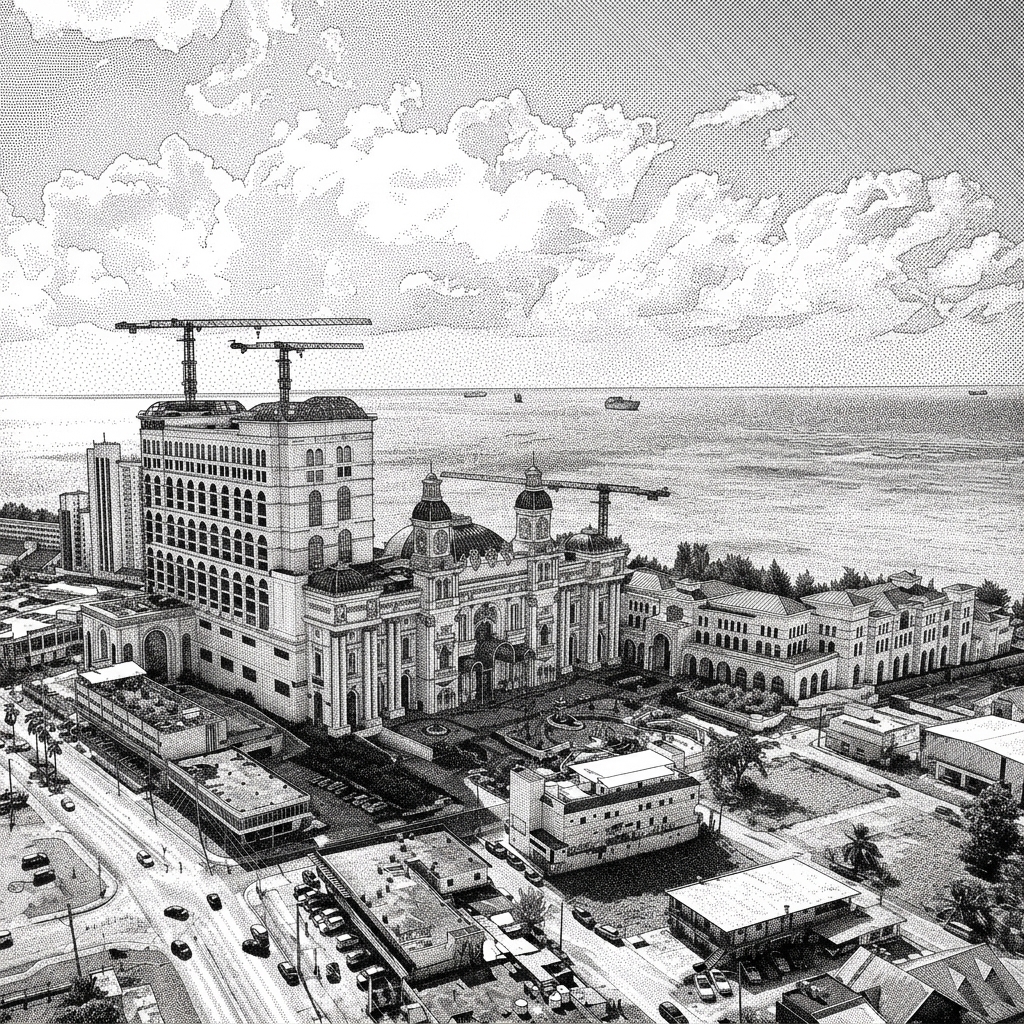
An economy, at its most fundamental level, is simply people going about the business of living. It is the clerk buying lunch at a roadside takeaway, the contractor buying hardware for a patio build, and the retiree taking a grandchild out for ice cream on a warm afternoon. Money derives its value from movement. When it passes smoothly from hand to hand within a community, a small island feels prosperous and full of life.
When that movement slows down, the quiet that follows is the sound of an economy contracting in slow motion.
The daily mathematics facing the Northern Marianas today are not a matter of anyone’s failure or poor intent; they are simply the stark arithmetic of isolated geography. To hold steady, an island needs a critical mass of economic velocity. Yet across the commonwealth, three pressures have converged at once. Retirees living on reduced pensions naturally tighten their belts, spending only on absolute essentials. Workers whose hours have been scaled back buy what they must and defer the rest. Local businesses, faced with soaring utility bills, shorten their operating hours or close two days a week to survive.
When a restaurant closes early to save on power, it earns less, pays less in gross revenue taxes, and offers fewer work hours to its staff. When workers earn less, local merchants lose customers. One person’s reduced spending becomes another person’s lost income.
Looking at these numbers realistically, a small island economy cannot simply lift itself out of a structural squeeze through local belt-tightening alone. Sometimes, the math requires a thoughtful infusion from the outside.
Where federal partnership can make the most immediate difference is in relieving the single heaviest burden on island balance sheets: energy. When power rates are tied entirely to the global price of imported diesel, every electric bill draws cash directly out of local registers and household savings. Direct federal investment into the Commonwealth Utilities Corporation—through grid infrastructure grants, renewable energy transitions, or targeted fuel subsidies—would act as an immediate economic stabilizer. Lowering the cost of power is the single fastest way to put disposable income back into the pockets of local families and give mom-and-pop shops room to breathe.
Beyond stabilizing energy costs, the islands need people and the economic energy that comes with them.
Federal agencies, regional organizations, and private industries could look to the Marianas as a premier Pacific gathering place. Targeted federal incentives could encourage organizations to host regional conferences, military and civilian training seminars, and trade conventions in Saipan, Tinian, or Rota. Bringing visitors for week-long gatherings fills hotel rooms, keeps taxicabs moving, supports local restaurants, and introduces mainland businesses to the quiet charm and strategic value of the islands.
Economic strength is built by opening doors and creating stability. By easing energy costs and inviting people back to meet, work, and build a life here, the local economy gains the steady momentum it needs to thrive.
No responses yet. Tell me what this brought back for you.