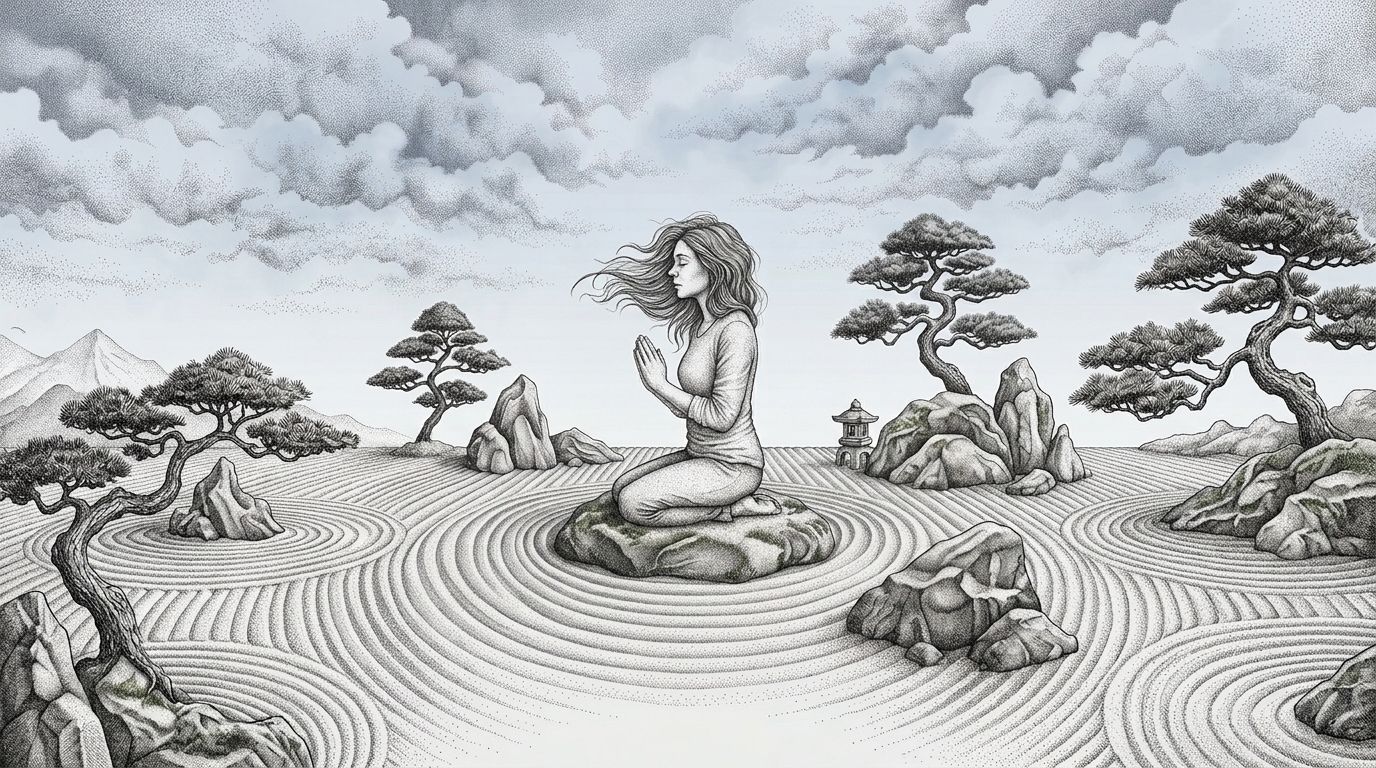
The death of someone you love is not a wound that heals; it is a landscape you learn to live in.
These words of a Buddhist monk stayed with me. Much of the pain of loss comes from the habit of looking for the departed in places they no longer inhabit. Love is a tether, and when it breaks, the soul drifts. It’s comforting to know that feeling broken does not make me weak. It was only a measure of how much was built in the first place.
When I find myself adrift, I look around for whatever might hold me steady.
Firstly, grounded in the Catholic faith, I get the deep, quiet comfort in the liturgy. The Resurrection of Christ promises life after death. But when grief burrows deep, other traditions offer refuge.
The Buddhists have a word for the immediate ache—dukkha. It’s the deep disquietude that comes with hanging on to things that cannot stay. I am reminded that I cannot expect permanence from a world that’s constantly changing. Loving less does not offer relief but disengaging from what has already shifted does.
The ancient Chinese philosopher Zhuang Zi went through the same trouble. When his wife died, he wept until he realized her passing was no stranger than the arrival of winter after autumn. It was simply the changing of the seasons. Still, knowing that loss is natural rarely helps you get through a quiet Tuesday morning.
For the daily work of living, Viktor Frankl provides relief. Surviving Auschwitz taught him that we can bear almost any suffering if we can find a reason to carry it. The pain doesn't stop us; the lack of a purpose does. There’s no one-size-fits-all formula. No one could hand me that purpose;I had to forge my own.
My faith gives me a horizon to look toward, but these Eastern insights give me practical footing for the trail. They don't replace the prayers I grew up with; they simply help me sit still in the pew when the disquiet rises.
Which leads me back to the Buddhist monk who claims those we lost are no longer persons to be held but presence to be felt. For him, my task is to get over my grief, and handle both sorrow and love in equal measure. My healing will be the monument I can build in their honor.
When I meditate, or say a prayer, I pay attention to my breathing: how air flows in and out. This is the only bridge I have between what was and what is. I continue to take a deep breath. I keep going.
No responses yet. Tell me what this brought back for you.