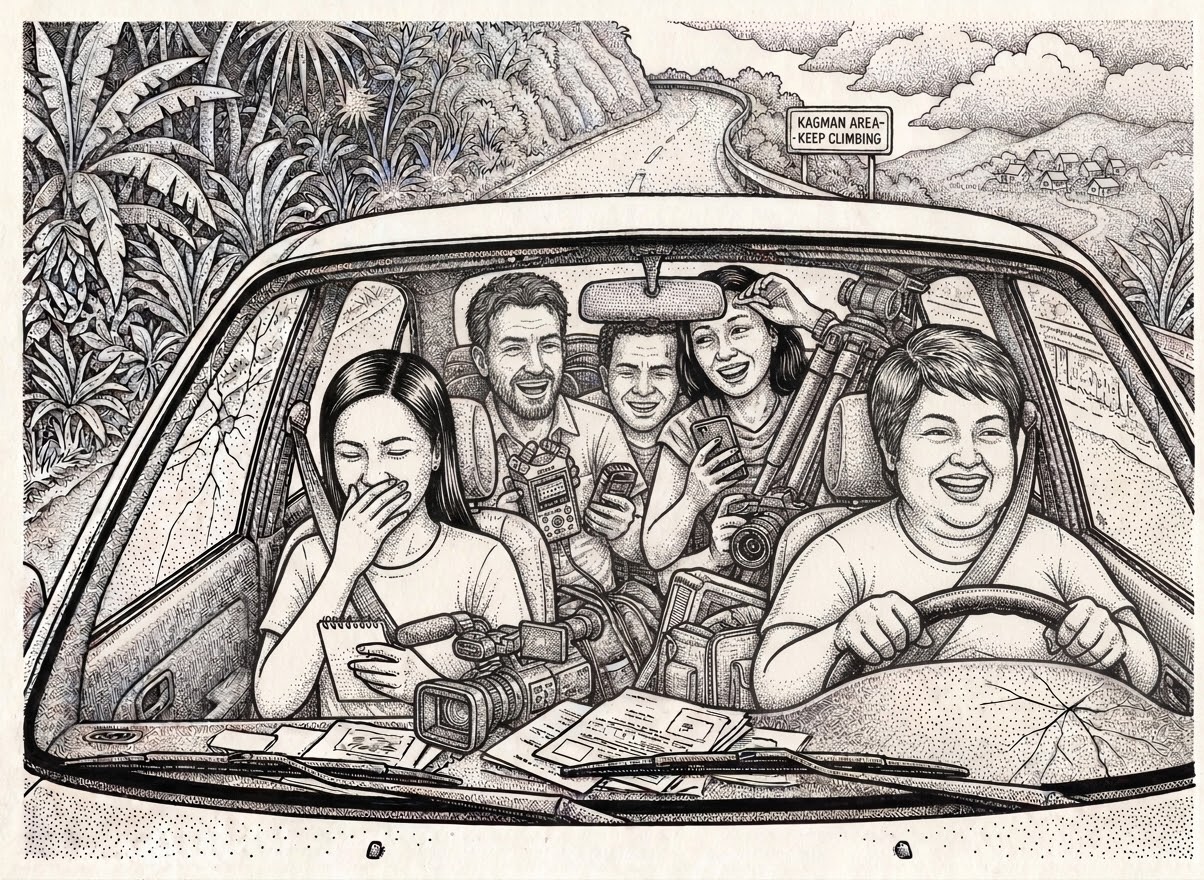
Night in Kagman is usually quiet, but as the car climbed the hill, the cicadas took over, loud and relentless. When it rained, water drummed against the roof while conversation ran on inside—Chamorro and Filipino voices trading stories past midnight.
We were reporters, bound to deadlines and daily beats, until Ulysses Sabuco introduced us to Pale’ Ike. After that, the noise of the newsroom stayed down the hill. Pale’ became the steady anchor of those evenings. He did not preach or posture; he simply listened, and the usual defenses came down.
I had sat in the pews at Santa Soledad while he said Mass, and his homilies had a way of sticking. But the real warmth belonged to the hours after the liturgy, when the vestments were put away and he was just our friend.
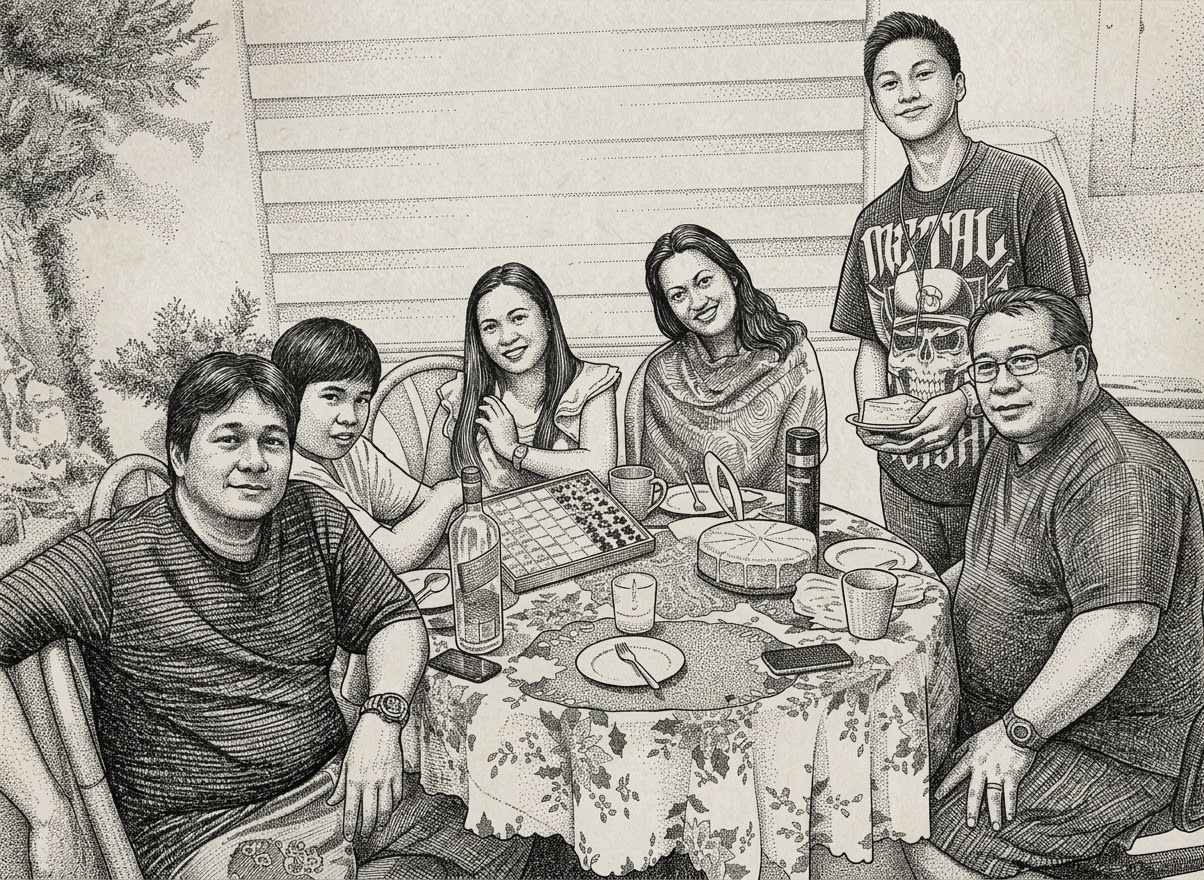
Almost every weekend, or whenever our schedules aligned, we made the drive up: Monet, Roselyn, Andrew, Tess, later Cherrie, and sometimes Arnold and Zaldy. Uly took over the kitchen, stirring a big pot of caldereta. Pale’ loved good food and long conversations, and those dinners offered plenty of both. After dinner came the real ritual: strong coffee, cup after cup, and cheesecake.
His booming voice filled the room, carrying over the storm outside. He had a dry, mischievous wit—the kind that stripped away any notion that priests couldn't take a good joke or make one—and the table was rarely quiet for long. We sat there until two or three in the morning, then coasted downhill to our flats for a few hours of sleep before the newsroom called us back.
Before Pale’ Ike, I had never been close to a priest. He never made friendship feel like a sermon, and his warmth held our scattershot newsroom family together.
When he was reassigned to Rota, those hilltop nights in Kagman came to an end, but the connection remained. Last month marked forty years since his ordination. This toast is a little late, but I hope it reaches him. Far from Kagman, I can still hear that laugh.
No responses yet. Tell me what this brought back for you.